 Reviews

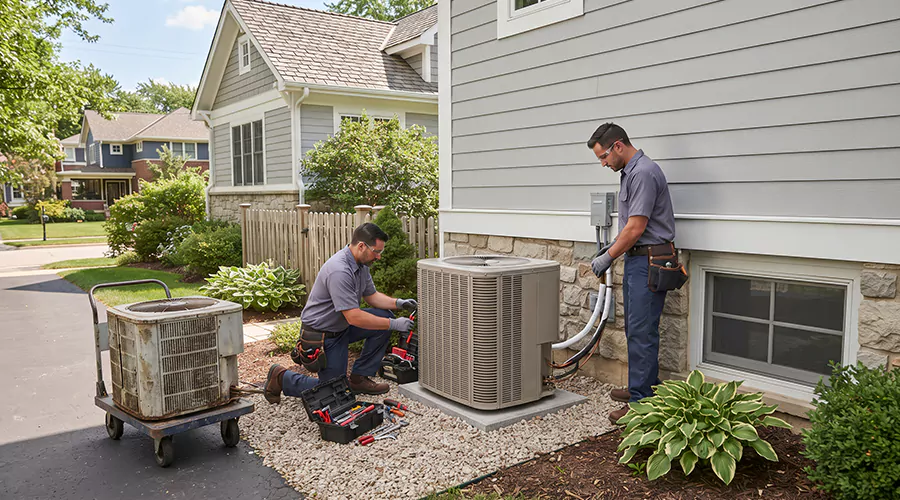
The cost to replace AC unit equipment typically falls between $5,000 and $12,000 for a standard central system in 2026. Smaller basic systems can fall below that range. High-efficiency variable-speed equipment can exceed $15,000 once labor and required system upgrades are included.
The final price depends heavily on equipment size and efficiency. Installation difficulty has a large effect too. A homeowner replacing only an outdoor condenser may receive a very different estimate from someone who needs a matched indoor coil.
The biggest mistake is comparing quotes by the equipment price alone. The installed system matters more because a cheaper unit can become expensive once electrical work or duct changes are added.
What Is the Average Cost to Replace an AC Unit in 2026?
A standard central AC replacement commonly costs about $5,000 to $12,000 installed in 2026. Basic single-stage systems tend to sit near the lower end, while two-stage equipment usually costs more. Premium variable-speed systems can reach $15,000 or higher depending on capacity and installation conditions.
The cost to replace air conditioner equipment is not based on the outdoor cabinet alone. A replacement quote can include the condenser and indoor evaporator coil. Refrigerant piping work may also be required.
A typical 3-ton system often falls near $6,000 to $9,000 under straightforward installation conditions. A larger 5-ton system can move beyond $10,000 when higher efficiency is selected. Homeowners sometimes compare the AC unit cost shown online with a contractor's installed estimate. Those figures are rarely the same because online equipment pricing often leaves out labor and required materials.
2026 AC Replacement Planning Ranges
| Replacement type | Typical installed range |
|---|---|
| Small basic central AC | $4,500 to $7,000 |
| Standard 3-ton system | $6,000 to $9,000 |
| Larger 4-ton system | $7,000 to $11,000 |
| Large 5-ton system | $8,000 to $13,000 |
| Higher-efficiency variable system | $9,000 to $15,000+ |
| AC plus major duct changes | $10,000 to $18,000+ |
| Full heating and cooling replacement | $10,000 to $20,000+ |
These numbers work best as planning ranges rather than fixed quotes. Home size changes the required equipment capacity. Existing electrical infrastructure can also change the installation. One counterintuitive point is that the largest AC isn't automatically the best AC. Oversized equipment can cool quickly while doing a poor job of controlling indoor humidity.
What Makes a New AC Unit Cost More?
The new AC unit cost rises when the system needs greater cooling capacity or higher efficiency. Installation access can also raise labor charges. Another major factor is whether the existing indoor coil can remain or whether the entire matched cooling system should be replaced.
Equipment size is usually expressed in tons. A 2-ton AC has less cooling capacity than a 5-ton AC. Larger equipment generally costs more because the compressor and coil are larger. Efficiency changes pricing too. Modern central systems use SEER2 ratings to describe seasonal cooling efficiency. Equipment with a higher rating usually costs more upfront.
The new air conditioner cost can increase further when a homeowner selects variable-speed technology. These systems can adjust output instead of operating only at full capacity. That extra control can improve comfort, but it can also raise equipment and repair costs. Installation location matters as well. A condenser beside a driveway is usually easier to replace than equipment mounted on a roof. The useful comparison is installed value rather than the equipment sticker price.
How Does AC Size Affect Replacement Cost?
Cooling capacity can change replacement cost by several thousand dollars. A smaller home may need a 2-ton system. A larger home can require 4 or 5 tons. Proper sizing should be based on the home's cooling load rather than replacing the old unit with the same size automatically.
The central ac unit cost generally increases as capacity rises.
2026 AC Capacity Planning Ranges
| AC capacity | Common planning range |
|---|---|
| 2 tons | $4,500 to $7,000 |
| 2.5 tons | $5,000 to $7,500 |
| 3 tons | $6,000 to $9,000 |
| 3.5 tons | $6,500 to $10,000 |
| 4 tons | $7,000 to $11,000 |
| 5 tons | $8,000 to $13,000+ |
Square footage alone does not determine AC size. Ceiling height matters, and insulation quality matters as well. Window exposure can change the cooling load, while air leakage can have a similar effect. This is why replacing a 4-ton unit with another 4-ton unit without checking the house can repeat an old sizing error.
An oversized unit may run short cycles, while an undersized unit may struggle during peak summer conditions.
What Is Included in an AC Replacement Quote?
A proper replacement estimate should identify exactly which equipment and installation work are included. The condenser is only one part of a central cooling system. Indoor coil compatibility also matters. Electrical modifications or refrigerant line work may need to be priced separately. The central air conditioner cost should identify the equipment model and rated capacity. The quote should also state whether the evaporator coil will be replaced.
Ask whether the existing refrigerant line set can stay. Older lines may need cleaning or replacement when equipment requirements change. The estimate should explain permit charges if local rules require them. A new equipment pad may also be needed when the existing base is damaged. The air conditioner installation cost can rise when new electrical wiring is required.
A disconnect replacement may add another charge. Some jobs require a crane because the condenser sits on a roof, and that can add several hundred dollars or more. The important comparison is scope. Two estimates that differ by $2,000 may not include the same work.
Why Can Two AC Replacement Quotes Be Thousands Apart?
Two quotes can differ because contractors are pricing different equipment or installation scopes. One quote may reuse existing components, while another may include a matched indoor coil. Efficiency level can also change the equipment price. Warranty terms and installation difficulty can widen the difference further. The central AC installation cost can change when one proposal includes electrical corrections, while another proposal may include only the basic replacement.
Equipment design can create another large difference. Single-stage units tend to cost less than variable-capacity equipment. Brand position can affect price too. A premium system does not automatically produce better results if installation quality is poor. Correct sizing and setup can matter more than paying for the most expensive cabinet.
Ask each bidder to show the exact model numbers. Compare efficiency ratings after that. Then compare what will happen to the existing indoor equipment. The cheapest proposal becomes easier to evaluate once every quote describes the same scope.
What Extra Costs Can Appear During Replacement?
Unexpected costs often come from the parts around the AC rather than the condenser itself. Old wiring can require correction. Damaged refrigerant lines can need replacement. Poor ductwork may also need repair before the new system can deliver its rated airflow.
The cost to replace central air unit equipment can increase when access is difficult.
Additional Work Planning Allowances
| Possible additional work | Typical 2026 planning range |
|---|---|
| Thermostat replacement | $150 to $500 |
| Electrical corrections | $300 to $1,500 |
| Refrigerant line replacement | $500 to $1,500 |
| New condenser pad | $150 to $500 |
| Condensate drain changes | $150 to $600 |
| Crane access | $500 to $1,500 |
| Major duct repairs | $1,000 to $5,000+ |
| Full duct replacement | $3,000 to $8,000+ |
The central AC price can also increase when the current indoor coil is incompatible with the new condenser. That issue is easy to miss when comparing equipment-only prices. A newer refrigerant platform can affect component compatibility too. Many systems sold in 2026 use newer lower-GWP refrigerants. Mixing unmatched equipment can affect system performance and may also affect manufacturer warranty coverage.
How Much Does It Cost to Install Central Air in a Home Without AC?
Adding central AC to a home that does not already have it usually costs more than a straightforward replacement. The project may require new ductwork or electrical service. Refrigerant lines must also be installed. Homes without usable ducts can push total project cost well above $15,000.
The cost to install central air depends first on whether usable ductwork already exists. A home with compatible ducts may need only the cooling equipment and related connections, while a home without ducts becomes a larger project. The central AC installation cost is higher when walls or ceilings must be opened for duct installation.
An electrical panel upgrade can add another significant expense. Older houses can have another problem. Existing ducts may technically exist but may be too small for modern cooling airflow. That means having ducts does not automatically make them usable. A load calculation and duct assessment should happen before equipment is ordered.
When Does Replacing the Entire HVAC System Make More Sense?
Replacing more than the AC can make financial sense when the furnace or air handler is already near the end of its expected life. A matched system can also avoid paying for overlapping labor twice. The decision becomes stronger when several major components need repairs within a short period.
The new HVAC system cost is usually higher than replacing cooling equipment alone. However, the difference may be smaller than replacing the AC now and the furnace two years later. The cost to replace HVAC system equipment can also make sense when compatibility becomes a problem. For example, an older indoor coil may not match a new high-efficiency condenser.
The HVAC system cost should be compared with the remaining life of every existing major component. Age alone should not make the decision. Condition matters more. A 12-year-old furnace with a clean heat exchanger can be a better candidate to keep than a younger unit with repeated failures.
10 Signs You May Be Approaching AC Replacement
Replacement becomes worth comparing with repair when failures become frequent or the system can no longer maintain normal comfort. Age matters most when it appears together with expensive repairs. High electricity use can provide another clue when it increases despite similar weather and thermostat habits.
- The AC needs major repairs more than once in two cooling seasons.
- The compressor has failed on an older system.
- The evaporator coil has developed a major leak.
- Cooling performance keeps declining after normal maintenance.
- Several rooms remain uncomfortable during normal summer conditions.
- The system starts and stops far more often than before.
- Electricity use rises sharply without a major thermostat change.
- Replacement parts have become difficult to obtain.
- The system needs two expensive components at the same time.
- A repair estimate reaches a large share of replacement cost.
The cost to replace AC unit equipment deserves serious comparison when one repair approaches several thousand dollars. A $300 repair on an older AC can still make sense, while a $3,000 compressor repair requires a different calculation.
What Can You Check Before Requesting Replacement Quotes?
Gather your existing equipment information before requesting estimates. Record the model number and age from the equipment label. Note the home's approximate square footage. Review your recent electricity use. This preparation helps you compare recommendations rather than accepting a replacement size without context.
- Start by photographing the outdoor unit's data plate.
- Do the same for the indoor equipment if the label is accessible without removing a service panel.
- Write down the thermostat model.
- Check whether the home has hot or cold rooms.
- Look at recent utility bills from comparable summer months.
Do not attempt your own refrigerant measurements or open high-voltage compartments. The goal is information gathering rather than technical diagnosis. A useful insider tip is to ask why the proposed tonnage was selected. “Because that is what you already have” is not the strongest sizing explanation.
When Should a Professional Evaluate Replacement?
A professional evaluation makes sense when a major repair is needed or the existing system can no longer keep the home comfortable. The evaluation should determine the required capacity before equipment is selected. It should also identify electrical or duct conditions that could affect the installed price.
- Ask for the proposed cooling capacity.
- Request the exact equipment model.
- Ask whether the indoor coil will remain.
- Ask which major modifications are included in the HVAC installation cost.
If the system is being replaced because of weak cooling, the underlying reason should still be diagnosed. Poor ductwork can make a new AC perform badly, and incorrect sizing can create the same result. Replacement should correct the actual problem rather than only exchange equipment.
How Can You Keep a New AC From Needing Early Replacement?
A new system lasts longer when airflow stays within its designed range and the outdoor coil remains clear. Filters need regular checks. Drainage also needs attention during cooling season. Correct installation at the beginning has more influence on long-term performance than many homeowners realize.
- Keep the filter from becoming heavily restricted.
- Do not block return grilles with furniture.
- Leave open space around the outdoor condenser.
- Watch for changes in startup sound.
- Investigate declining airflow before the system begins freezing.
- Have refrigerant problems diagnosed rather than repeatedly adding refrigerant.
The new central air unit cost makes prevention financially meaningful. Spending modest amounts on routine care is easier to justify when premature replacement can cost thousands.
Conclusion
The cost to replace AC unit equipment usually falls around $5,000 to $12,000 for a standard central system in 2026. Capacity and efficiency drive much of the price. Installation conditions can change it further. Compare quotes by model and scope rather than total price alone. This week, photograph your current equipment labels and gather two recent summer electricity bills before requesting replacement estimates.
Frequently Asked Questions
Sometimes. Contractor demand can be lower during mild weather. Equipment promotions may also change by season. Availability matters more than the calendar alone.
Sometimes the condenser can be replaced without replacing every indoor component. The remaining coil must still be compatible with the new equipment and refrigerant requirements.
Not always. Savings depend on local cooling hours and electricity rates. The price difference between equipment options should be compared with expected annual operating savings.
Normal wear is generally not covered. Damage caused by a covered event can be treated differently depending on the policy terms.
Many systems operate for about 12 to 20 years. Climate and maintenance can move actual service life outside that range.
Not automatically. Existing ducts can stay when they are properly sized and in good condition. Damaged or undersized ducts should be addressed before expecting full performance from new equipment.